
What parasites do wild hedgehogs get and how to treat wild hedgehog parasites.
A majority of hedgehogs admitted into hedgehog rescues will have a high burden of internal parasites.
Although it is normal for hedgehogs to have a few internal parasites, a healthy hedgehog will develop a natural immunity to them. If a hedgehog is sick (for example, due to an injury compromising its immune system), however, it tips this balance in favour of the parasites, sending the hedgehog on a downward spiral. A high parasite burden will stop the hedgehog getting enough nutrients from their food and they will slowly starve. A poorly hedgehog is less able to cope with internal parasites and so the downward decline is exacerbated.
Once they are critically sick, a hedgehog will display the unnatural behaviour (for a nocturnal creature) of coming out in the day – often due to starvation.
So how do hedgehogs get internal parasites and why are sick hedgehogs coming in with so many more types of internal parasite?
We think of hedgehogs as voracious slug munchers. It is true, of course, that hedgehogs do eat slugs, but they are not high up on the menu. I mean, would you choose to eat slugs if crunchy beetles were also available? Looking at the chart below, you can see that slugs, snails and even earthworms are lower down the hedgehog menu than beetles.
Slugs, snails and earthworms are also the intermediate host to three of the key internal parasites that affect hedgehogs.
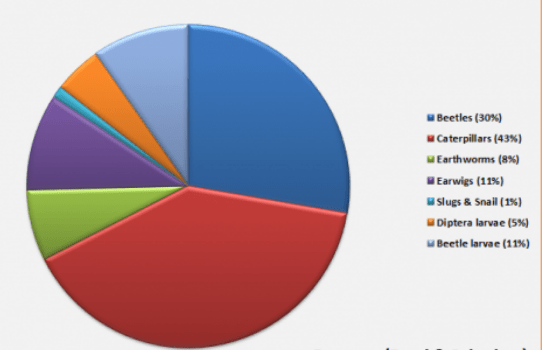
The internal parasites identified by different hedgehog rescues can tend to vary across the country and it is likely also changing in response to climate change and other environmental factors. Thorny Headed Worm is increasing in prevalence in the York region. Here’s which parasite is carried by which intermediate host.
Roundworm = earthworms
Fluke = slugs and snails
Lungworm – slugs and snails
Thorny headed worm – woodlice
These parasites can even be passed on from mum to baby in the womb so hedgehogs can have parasites even if they are found as tiny orphans.
These internal parasites can only be correctly identified by a specialist hedgehog rescue looking at the hedgehog’s poo under a microscope. There are some other signs that can suggest a parasite burden but checking poo is still essential. Fluke can cause excessive hyperactivity and the poo to smell particularly horrid. An experienced hedgehog rehabilitator can often smell fluke before it is identified under the microscope. Hedgehogs with lungworm can have a terrible deep cough like a smoker’s cough. A high worm burden will often put a hedgehog off eating.
Sick hedgehog poo
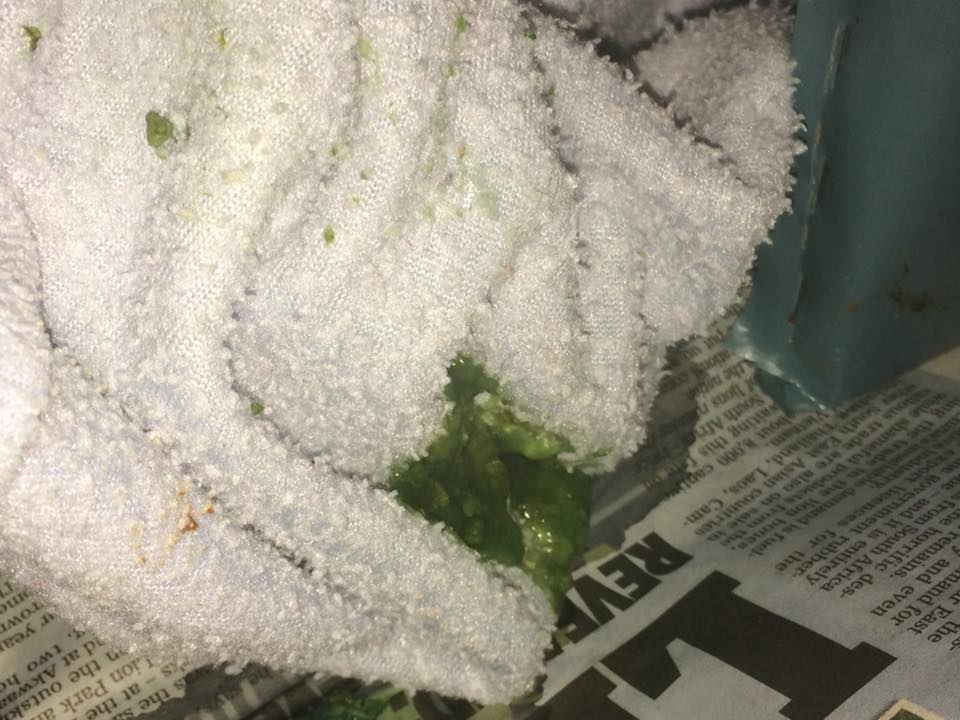
Normal hedgehog poo will be lovely and firm and dark brown/black. You can read more about hedgehog poo here. The poo of a sick hedgehog may be green/yellow in colour and more like diarrhoea. It may also have blood in it. Apart from knowing that the hedgehog is sick though, you can’t determine what illness the hedgehog has just from the colour of the poo.
Green poo is a sign that the gut is being irritated but it can be caused by one or a combination of several things including Fluke, a high burden of other internal parasites, a protozoan infection like Coccidiosis, a bacterial infection like Salmonella or stress. It is vital to test the poo to find out what it has and to start urgent treatment. You also have to be very careful with hygiene because bacterial infections like coccidiosis can rapidly spread between hedgehogs and humans can also pick up bacteria carried by hedgehogs, such as E.Coli and Salmonella.
So why are hedgehogs coming in with a greater range of internal parasites than previously? Well, I’m not a scientist so I will leave that to the experts but I note several things. As a gardener, I’ve seen fewer beetles in recent years, even though I am an organic gardener and I create habitats for beetles. Habitat loss will affect hedgehog’s access to beetles. Concrete gardens with a square of grass and nothing else are not attractive to beetles. Pesticides sprayed on crops target beetles and may explain why there are fewer hedgehogs around farmland. If a hedgehog cannot find enough food, they start to starve, reducing their immunity to internal parasites.
Milder winters are not killing off slugs and snails. There are more of them around. In the absence of other foods, hedgehogs will munch on them. They don’t know they carry parasites!
The time of year also affects what parasites hedgehogs come into rescue with. In Winter there are few beetles and caterpillars around. Late born babies often have a high burden of roundworm and lungworm because earthworms, slugs and snails are the only foods that are around.
You can read more here about the causes of the decline in hedgehog numbers.


But before you go reaching for the slug pellets to eradicate the hosts, don’t forget that slug pellets kill hedgehogs. Try organic methods of controlling slugs. I use nematodes, such as Nemaslug.
The best thing you can do to help is to create a healthy habitat for hedgehogs through wildlife friendly gardening and helping to prevent hazards that can cause injury. A healthy environment should mean healthy uninjured hedgehogs that are able to tolerate and self-manage their worm burdens. Supplementary feeding also helps to keep hedgehogs healthy.
Can you treat all hedgehogs for parasites?
No, you cannot treat hedgehogs in the wild. All hedgehogs will pick up internal parasites and these are not normally a problem. The treatments for each parasite are different and depend on the weight of the hedgehog. They are specialist treatments. The most important thing you can do is to look out for hedgehogs out in the day – which normally means they have a high parasite burden, injury or both. You can also monitor your visiting hedgehogs on a night camera.
Learning to help hedgehogs
If you’d like to learn more about how to help hedgehogs, including internal parasites, I run online hedgehog courses for all levels of knowledge, including people working alongside a hedgehog rescue. My courses will also signpost you to other useful resources including the hedgehog faecal sample service offered by Vale Wildlife Hospital.
About me
I am busy transforming an acre of land in the Yorkshire Wolds into a haven for wildlife and have many years experience as a wild hedgehog rehabilitator. If you have found the information on this website useful, I would be so grateful if you would consider making a donation to help me continue my awareness work. You might also like my handmade silver jewellery that comes with information about how to help hedgehogs.

 Little Silver Hedgehog
12 thoughts on “Hedgehog parasites”
Comments are closed.