
Wildlife gardening tips for Spring
Spring is beginning to unfurl and here’s a look back at my old York wildlife garden with lots of tips for creating a wildlife habitat in a small urban garden. This one focuses on Spring but you can also read my tips for wildlife gardening through the seasons in Autumn and Winter.
Container bulb gardens
Gardening for wildlife involves planning your garden to ensure that plants flower for as long as possible, providing nectar and cover for insects. Even a small garden can be a brilliant habitat for wildlife. These Spring planters include bulbs and flowers that will provide nectar for early emerging bees and other insects.

Spring borders
Borders should be packed with bulbs in Spring – Daffodils, Crocus, Anenomes and also perennials like Primroses. They provide beautiful colour as well as nectar for early emerging insects. If you didn’t plant your bulbs last Autumn, you can buy small bulbs at your local garden centre and they will come back year on year and also spread over time to provide a beautiful carpet of flowers.

Spring shrubs
I’ve planted a wide range of shrubs that flower in Spring. They add beautiful colour and also provide nectar for early emerging insects. Here are a couple of my favourites.

Flowering Currant is a brilliant Spring shrub. It is a beautiful crimson pink and provides early nectar for bees.
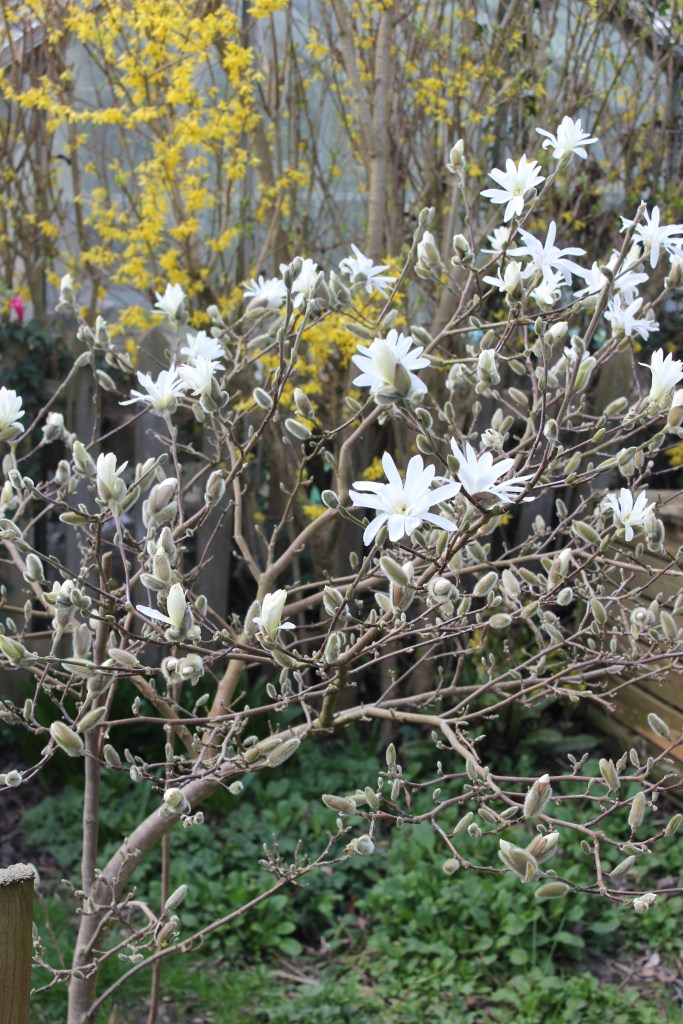
Forsythia makes a fabulous hedge and creates a beautiful yellow feature in the Spring garden. I love the way it sits alongside Daffodils and Primroses. It also provides early nectar. This Star Magnolia makes a beautiful dwarf feature tree in a small urban garden.
Spring hedgehogs
Hedgehog hibernation ends in Spring with milder weather and warmer night time temperatures. Hedgehogs appear to be emerging from hibernation earlier than usual in recent years due to climate change. Make sure you have plenty of water available. Hedgehogs wake up thirsty from hibernation. I also put plenty of kitten biscuits out in the feeding station. I use the night camera to check that it’s definitely a hedgehog eating the food. It’s too early to be thinking about cleaning out hibernation boxes. I usually recommend doing that in April.
Hedgehog highways
Spring is a brilliant time to check all your hedgehog highways linking your garden with your neighbours before the foliage grows back. It is also a fantastic time of year to be creating new hedgehog holes. Read how to create your hedgehog highway here.

Spring wildlife pond
Wildlife ponds help attract insects to your wildlife garden and also provide a water source for birds and mammals. Always make sure you provide an escape route for hedgehogs though. I have planted pond plants on the shallow ledges around my wildlife pond. These provide fantastic spawning grounds for frogs. Every Spring, I check and re-plant any planters that have lost their plant covering. I use plastic pond containers and fill them with aquatic compost. It must be aquatic compost to avoid adding too many nutrients to the pond which will cause it to go green. I then divide water forget me nots and plant them in the aquatic compost, before adding a layer of pond gravel to keep the soil in place and help weight down the containers.

I also have submerged plants in the deeper centre of the pond, where newts lay their eggs. Although my wildlife pond is sited away from large trees and I cover the pond in Autumn to help stop too many leaves drifting in, I always scoop out any excess of leaves before the frogs start to spawn – which can be Valentine’s Day or earlier in some places. If you are thinking of creating a wildlife pond from scratch, here is a great guide.

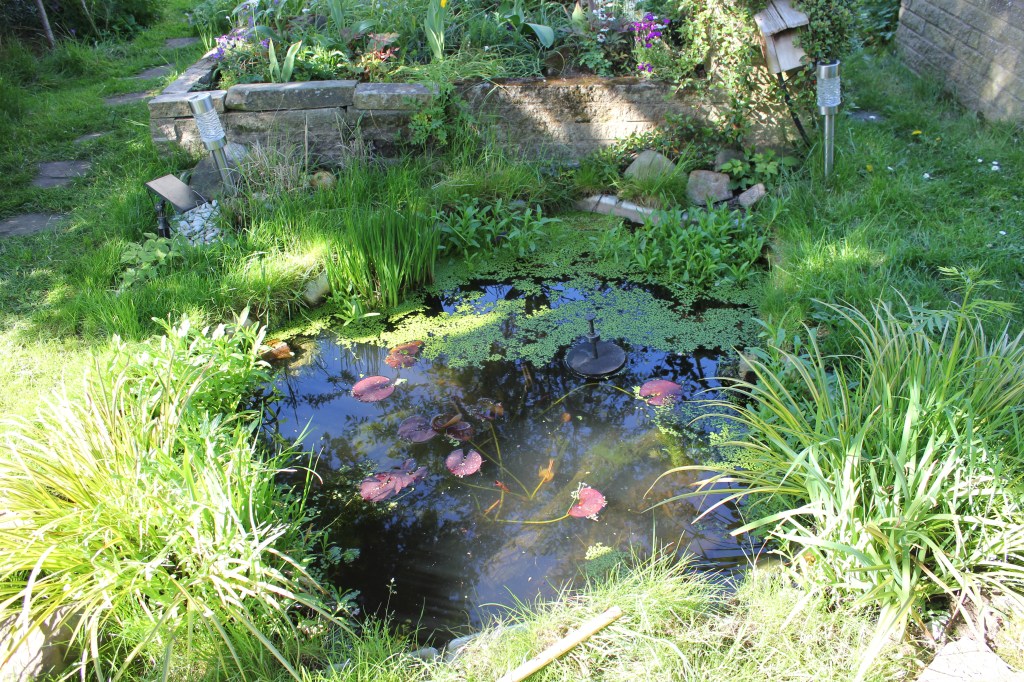
Here is my old wildlife pond in late Spring. The plants around the edge provide cover for foraging frogs and newts. There are plenty of submerged plants to provide different habitats, food and spawning grounds for amphibians. My small pond even attracts dragonflies.
Late Spring borders
Plan your garden to provide cover and flowers throughout the seasons. Primroses, Daffodils and Crocuses soon give way to Forget me nots and Anenomes in late Spring. The geranium species I have chosen provide leafy ground cover all year round. I simply trim them back in Spring before the new growth starts. I also divide them in mid Spring to provide more plants for planting around the garden – a cheap way to create a wildlife garden. Focus on multiplying those plants that already flourish in your garden. Packed borders provide safe foraging for hungry hedgehogs and hidey holes for insects and bugs. You can also read my guide to hedgehog friendly planting for more plant inspiration.

Learn more about hedgehogs
If you’d like to learn more about how to help hedgehogs in your garden, I run online hedgehog courses for all levels of knowledge and experience.
About me
I’m a hedgehog expert, wildlife gardener and garden blogger. I hope to inspire people with how to create a wildlife habitat even in a small urban garden. If you’ve found the information on my website useful, I’d be so grateful if you would consider supporting my work.
You might also like my handmade wildlife jewellery inspired by hedgehogs and other wildlife and plants. It comes with a rescue hedgehog postcard and information about how to help hedgehogs.

 Little Silver Hedgehog